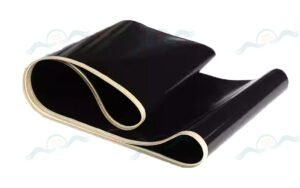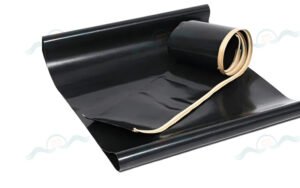

High-temperature conveyor belts utilized in food drying, baking, and thermal setting processes must satisfy stringent regulatory and operational criteria. Belts coming into direct contact with food ingredients and semi-finished products require specialized engineering beyond basic heat resistance.
I. Regulatory Compliance & Food Safety
- Material Standards: Raw materials must comply with international food contact regulations (such as FDA or EU standards), ensuring zero toxic leaching, chemical migration, or odor emission at elevated temperatures.
- Fat & Moisture Resistance: Materials such as silicone and PTFE (Teflon) resist breakdown caused by prolonged contact with animal fats, vegetable oils, and high humidity.
II. Hygienic Surface Engineering & Debris Control
- Non-Stick Cleanability: Surfaces must be dense and non-porous to prevent caramelized sugars, oils, and residues from penetrating, enabling easy cleaning and minimizing microbial growth.
- Zero-Shedding Durability: Belts must resist flaking, micro-particulate shedding, and cracking under mechanical stress, eliminating foreign object contamination risks.
III. Thermal Stability & Precision Fabrication
- Structural Resilience: Prevents thermal softening, shrinkage, or dimensional deformation during repeated temperature cycling. Food-grade silicone handles mid-temperature zones, while PTFE belts support continuous high-temperature baking and thermal pressing.
- Gap-Free Jointing: Fabrication steps—including slitting, punching, and joint splicing—must produce flush, gap-free seams to prevent food accumulation in splice crevices.