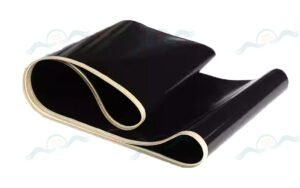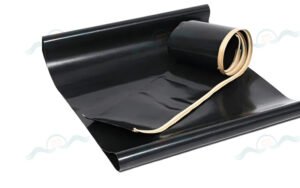
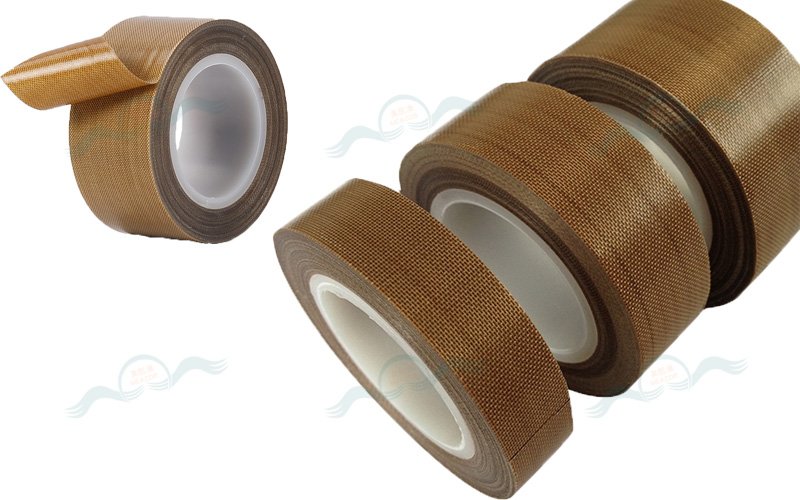
The base material of high-temperature PTFE tape is polytetrafluoroethylene — a fully fluorinated carbon polymer. Its molecular structure uses carbon atoms as the backbone, with fluorine atoms bonded through strong covalent bonds in a stable helical conformation. This molecular arrangement produces an extremely low surface energy and a high degree of chemical inertness. The crystalline melting point of PTFE is approximately 327°C, providing the theoretical basis for its high-temperature resistance characteristics.
High-Temperature Performance Mechanisms
Under sustained elevated temperatures, PTFE tape behaves significantly differently from common polymers. As temperature continuously rises, PTFE molecular chains undergo orderly conformational transitions rather than direct chain scission and decomposition. The thermal stability upper limit is approximately 260°C — within this temperature range, the material retains its original physical form and chemical properties. The temperature resistance limit of PTFE tape is closely related to its thickness, manufacturing process, and additive composition; the actual operating temperature range may vary slightly across different product specifications.
Application Scenarios
The high-temperature resistance of PTFE tape makes it suitable for diverse industrial environments:
Heat Sealing Machinery: When applied to the roller surfaces of heat sealers, the tape withstands repeated heat-pressing cycles without adhesion or deformation
Electronics Industry: High-temperature soldering operations commonly use this tape as localized protection material — preventing solder spatter and thermal damage
Food Processing Equipment: Certain high-temperature components in food processing machinery use this tape, as it releases no harmful substances at elevated temperatures
All these applications are built upon the foundation of the material’s inherent stability.
Manufacturing Process Enhancements
Special processing during manufacturing further enhances PTFE tape performance:
Biaxial Orientation: The substrate undergoes biaxial stretching — aligning molecular chains in specific directions to improve mechanical strength
Surface Treatment: Corona treatment or chemical etching is sometimes applied to improve adhesion without compromising bulk temperature resistance
Silicone PSA Backing: The silicone pressure-sensitive adhesive on the tape backing uses a specially formulated composition to maintain appropriate adhesion at elevated temperatures while ensuring clean, residue-free removal
Environmental Factors in Use
When using high-temperature PTFE tape, the synergistic effects of environmental factors must be considered. Although the material itself withstands high temperatures, actual service life is constrained by multiple factors: temperature cycling frequency, mechanical pressure, and chemical media exposure. In scenarios combining sustained high temperature with chemical corrosion, small-scale testing is recommended to evaluate suitability before full deployment. Correct installation — including ensuring clean surfaces, appropriate tension control, and proper seam treatment — has a real and meaningful impact on achieving optimal material performance.
Material Limitations
Material limitations are a necessary consideration when evaluating suitability:
Thermal Decomposition Risk: PTFE may undergo pyrolysis at extremely high temperatures, releasing fluorinated gases
Mechanical Degradation: Above 300°C, mechanical properties gradually decline
Low Thermal Conductivity: While heat resistance is outstanding, PTFE’s relatively low thermal conductivity limits its application in scenarios requiring rapid heat transfer
Batch Variation: Performance in long-term thermal aging tests may differ between manufacturers
Emerging Developments & Future Directions
A deeper understanding of PTFE tape’s high-temperature resistance mechanisms helps expand its application boundaries. Recent materials science research has developed new composite tape materials with enhanced temperature resistance — achieved by incorporating inorganic nanoparticles into the PTFE matrix or adopting multilayer composite structures. These development directions are not aimed at replacing traditional products but rather at providing additional options for specialized industrial requirements. Future material development may increasingly focus on improving other physical properties such as wear resistance or flexibility while maintaining high-temperature resistance characteristics.
Anhui-Produced High-Temperature PTFE Tape
High-temperature PTFE tape manufactured in Anhui Province follows the same materials science principles governing comparable products worldwide. Regional industry characteristics are reflected in the standardization level of production process control and quality inspection systems. A manufacturer’s rigor in raw material screening, processing environment control, and finished product testing methodology directly determines the thermal stability of the final product — and these technical details of the production process ultimately define the tape’s reliability in real-world applications.