What Are the Application Scenarios of PTFE High-Temperature Fabric (Teflon Cloth)?
PTFE high-temperature fabric (PTFE-coated fiberglass cloth) is widely used across more than twenty industrial sectors and everyday applications, leveraging its core properties of high-temperature resistance (-70°C to 260°C, with short-term peaks exceeding 300°C), non-stick performance, low friction, chemical corrosion resistance, electrical insulation, and flame retardancy. The following presents its primary application scenarios organized by industry.
Ⅰ. Food Processing (Food-Grade FDA Certified)
| Application | Specific Use | Core Advantage |
|---|---|---|
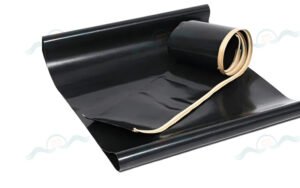
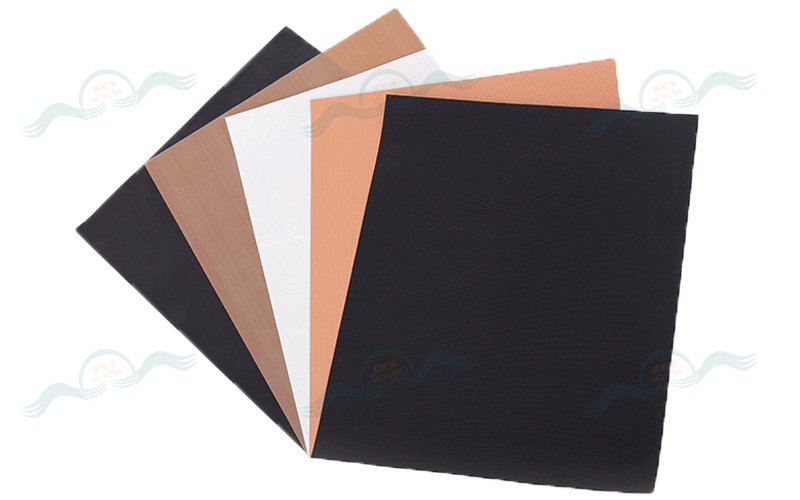
| Baking & Cooking | Baking tray liners, oven mats, microwave gaskets | Non-stick and easy to clean; withstands 260°C; no deformation after 1,000 continuous baking cycles |
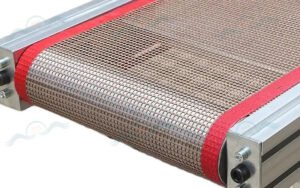
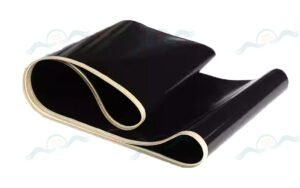
| Food Conveying | Drying conveyor belts, cooling conveyor belts, ironing machine felts | Anti-stick and anti-contamination; compliant with food hygiene standards; improves production efficiency |
| Household Kitchen | Air fryer liners, electric griddle mats, BBQ grill mats | Thermal insulation; prevents oil adhesion; easy to clean |
| Food Packaging | Heat-seal mold liners, sealing machine belts | Precise packaging film positioning; prevents adhesion; improves seal quality |
Ⅱ. Industrial Conveyor Belts & Power Transmission
- Drying Machinery: Conveyor belts for drying lines handling paper, timber, plastics, and metal components
- Vulcanization & Curing: Rubber vulcanization conveyor belts, abrasive disc curing release liners, carpet backing curing conveyor belts
- Printing & Dyeing: Transfer printing heat press blankets and print guide belts — ensuring sharp patterns without adhesion
- Electronics Manufacturing: SMT pick-and-place production line conveyor belts — preventing PCB board warpage and reducing electrostatic interference
- Lithium Battery Production: Electrode foil drying process conveyor belts — electrolyte-resistant, ensuring stable battery performance
Ⅲ. Chemical Processing & Corrosion Protection
- Pipeline Protection: Anti-corrosion wrapping for petrochemical and chemical pipelines; resistant to hydrochloric acid (30%), sulfuric acid, and other aggressive media; service life up to 8 years
- Equipment Linings: Desulfurization tower, reactor, and storage tank inner linings; resistant to SO₂ and other corrosive gases; prevents electrostatic discharge-induced dust explosions
- Sealing Gaskets: Pipeline flange and valve sealing gaskets; withstands high temperature and pressure; provides reliable sealing to prevent media leakage
- Flexible Expansion Joints: Absorbs thermal expansion and contraction displacement in pipelines while providing corrosion resistance, extending equipment service life
Ⅳ. Electronics, Electrical & Insulation
- High-Frequency Copper-Clad Laminates: Substrate material with low dielectric constant (2.6) and dissipation factor below 0.0025; excellent electrical insulation performance
- Electrical Insulation: Motor and transformer insulation layers; maintains stable insulation performance in high-temperature environments
- Cable Protection: High-temperature cable sheathing; prevents aging and mechanical damage
- Welding Protection: Welding protection blankets and welding curtains; shields against high-temperature weld spatter; protects equipment and personnel safety
Ⅴ. New Energy & Photovoltaics
- Photovoltaic Modules: Lamination process buffer layers; evenly distributes pressure; prevents solar cell micro-cracking; improves module yield rate
- Lithium Batteries: Electrode foil drying conveyor belts and separator production auxiliary materials; electrolyte-resistant; ensures production safety
- Fuel Cells: Proton exchange membrane substrate; high-temperature resistance and chemical stability; improves fuel cell efficiency
Ⅵ. Textile & Printing/Dyeing
- Stenter Machine Fabric Sleeves: Withstands temperatures above 200°C; uniform heat transfer; reduces fabric color variation; improves product quality
- Printing & Dyeing Guide Belts: Non-stick surface ensures sharp print patterns; improves dyeing precision and efficiency
- Heat Cutting Machine Liners: Silicone on one side and PTFE on the other — perfectly combining anti-slip and non-stick properties; improves cutting precision
Ⅶ. Construction & Membrane Structures
- Lightweight Roofing & Canopies: Sports stadiums, station canopies, and landscape awnings; excellent weatherability; low elongation rate (< 5‰); reduces self-weight load
- Energy-Saving Thermal Insulation: Valve insulation jackets, pipeline insulation sleeves, and removable insulation blankets; reduces energy consumption by 20–60%; temperature reduction exceeding 50%
- Building Sealing: Curtain wall joint sealing and rooftop waterproofing; aging-resistant; long service life
Ⅷ. Aerospace & Defense
- Aircraft Manufacturing: Engine heat shields, hydraulic system sealing components; heat-resistant, oil-resistant, and corrosion-resistant
- Satellites & Rockets: Thermal protection system materials; withstands extreme temperature cycling; maintains structural integrity
- Military Equipment: High-temperature component protection for tanks and armored vehicles; enhances equipment operational reliability
Ⅸ. Other Specialized Applications
- Medical Sector: High-temperature sterilization packaging for surgical instruments and insulation layers for medical equipment; compliant with medical-grade hygiene standards
- Friction Materials: Brake pad and clutch disc substrates; heat-resistant with stable friction coefficient
- Grinding Wheel Slicing: Curing release liners; prevents grinding wheel adhesion; improves slicing quality
- Sealing Machine Thermal Insulation: Shields operators from high-temperature exposure; improves workplace safety and operational efficiency
PTFE high-temperature fabric serves industrial production, food processing, new energy, construction, aerospace, and numerous other sectors. Its core value lies in solving four fundamental industrial challenges: high temperature, chemical corrosion, material adhesion, and electrical insulation — making it an indispensable high-performance composite material in modern industry.