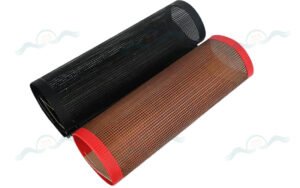
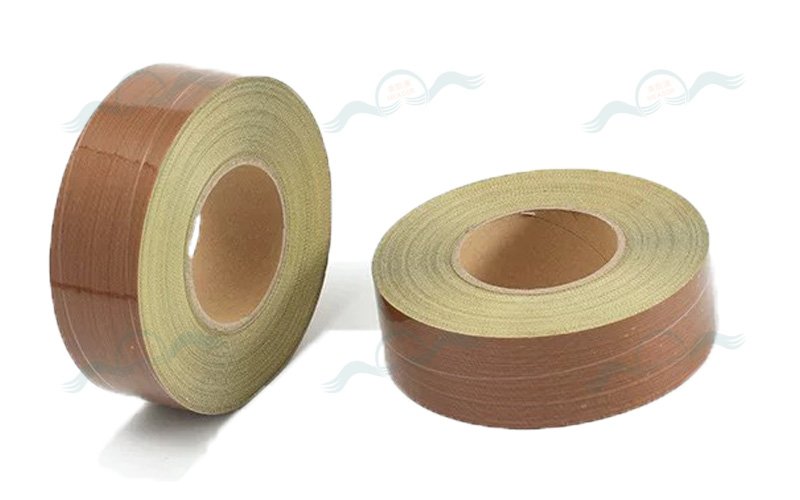
PTFE (Teflon) Tape: How to Distinguish Between Different Types of PTFE Tapes?
Pure PTFE film tape and PTFE fiberglass tape share similar performance characteristics, yet key differences exist. Based on substrate materials, PTFE tapes are categorized into two main types: PTFE Fiberglass Tape (utilizing woven glass fiber cloth as the base substrate) and Pure PTFE Film Tape (utilizing pure PTFE film as the base substrate). Many customers easily confuse the two during procurement. Below is a guide on how to differentiate them:
- Color & Surface Appearance: PTFE fiberglass tape is typically light brown, beige, or black, featuring a visible fabric weave pattern on the surface and usually paired with a yellow wavy release liner. Pure PTFE film tape is dark brown or black, with a smooth surface free of any mesh texture.
- Tensile Strength: Comparatively, PTFE fiberglass tape exhibits superior tensile strength and stretch resistance due to its internal woven fiberglass reinforcement.
- Thickness & Specifications: Pure PTFE film tape can be produced in significantly thinner gauges compared to fiberglass-reinforced options.
Key Features of PTFE Tape:
- Wide Operating Temperature Range: Performs reliably across extreme temperatures from -196°C to +300°C, featuring excellent weather resistance and aging stability.
- Non-Stick Surface: Highly resistant to adhesion from foreign substances; extremely easy to clean.
- Chemical Resistance: Impervious to strong acids, strong alkalis, aqua regia, and various organic solvents.
- Inert & Non-Toxic: Resistant to virtually all pharmaceutical products and chemical agents.
- High Insulation & Protection: Offers high dielectric insulation, UV protection, and anti-static properties.
- Flame Retardance: Inherently flame-retardant and non-combustible.
- User-Friendly & Durable: Highly convenient to apply with a long operational service life.
Application Scope of PTFE Tape:
- Roller & Plate Coating: Ideal for various high-temperature roller coatings, heating plates, and mold-release workpieces.
- Lining & Release Applications: Widely used as non-stick linings for chutes, hoppers, and aviation molds, as well as sizing machine rollers and thermoplastic demolding processes (reusable and easy to replace).
- Surface Protection: Frequently applied for high-temperature and corrosion-resistant surface treatments.
- Multi-Industry Use: Broadly used in packaging, thermoplastics, composite processing, heat sealing, and electrical/electronics industries. PTFE series products provide high-temperature electrical insulation across aerospace, electronic, automotive, and industrial sectors.
- Adhesive Systems (Silicone vs. Acrylic): Silicone pressure-sensitive adhesive tapes are designed for high-temperature applications (up to 260°C–300°C) with superior thermal stability. Acrylic adhesive tapes are primarily utilized for lower temperature applications (generally rated up to +120°C) as a cost-effective alternative. They are ideal for packaging, lamination, and heat-sealing machinery requiring thermal resistance, corrosion resistance, insulation, and easy re-positionability/replacement.