High-Temperature PTFE Mesh Belts: Heat-Resistant Solutions for Industrial Conveying
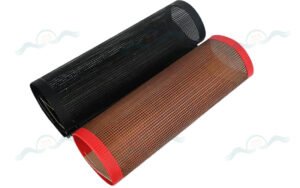
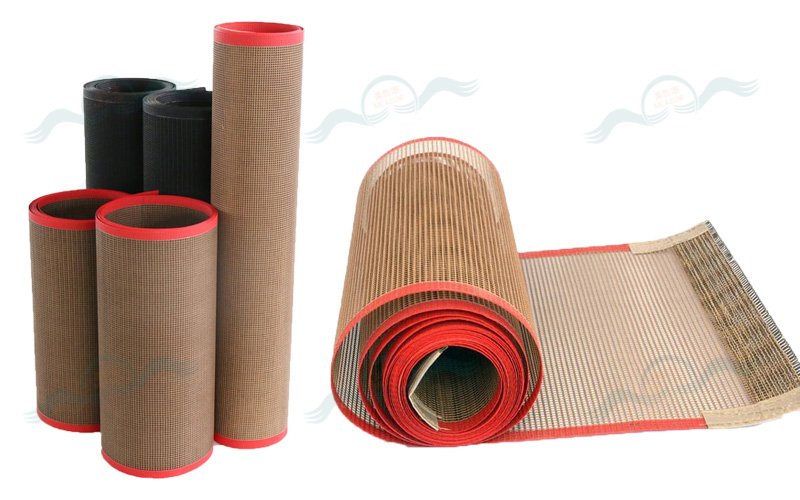
As a high-performance industrial conveying material, high-temperature PTFE (Teflon) mesh belts play a vital role across a wide range of industrial sectors thanks to their superior thermal resistance, chemical inertness, and non-stick properties. Below is a detailed overview of the product characteristics, application sectors, and industry advantages of high-temperature PTFE mesh belts.
I. Product Characteristics
- Superior High-Temperature Resistance: High-temperature PTFE mesh belts operate reliably in extreme thermal environments, typically rated for continuous use from $-70^\circ\text{C}$ to $+260^\circ\text{C}$, with select high-grade options tolerating short-term peaks up to $300^\circ\text{C}\text{–}350^\circ\text{C}$. This makes them ideal for food baking, chemical reactions, and plastic thermoforming.
- Strong Chemical Corrosion Resistance: Exhibits high chemical inertness against strong acids, strong alkalis, organic solvents, and other aggressive media, making it a dependable choice for chemical processing, pharmaceuticals, and electroplating.
- Non-Stick Properties: A smooth surface repels virtually all substances, preventing material adhesion during conveyance, reducing cleaning and maintenance workload, and boosting throughput.
- High Dimensional Stability: Low elongation ensures precise dimensions and shape retention even under high temperatures, supporting accurate and reliable conveying.
- High Mechanical Strength: Built on a fiberglass cloth substrate coated with PTFE resin, combining heat and chemical resistance with strong mechanical performance to withstand tension and impact loads.
II. Application Fields
- Food Processing Industry: Widely used in food baking, frying, and cooling lines. High temperature resistance supports safe, hygienic processing, while non-stick surfaces reduce food residue, simplify cleaning, and improve efficiency.
- Chemical Industry: Applied in reactors, dryers, and cooling towers to convey corrosive materials or high-temperature media while maintaining operational stability and safe transport.
- Textile Printing & Dyeing Industry: Performs reliably in high-temperature drying and heat-setting processes without thermal deformation or damage, while open-mesh breathability and non-stick surfaces improve drying efficiency and product quality.
- Electronics Manufacturing Industry: Used to convey sensitive components and circuit boards during transfer and baking, protecting parts from heat damage while electrical insulation helps mitigate static and electromagnetic interference.
- Other Industries: Extensively used across pharmaceuticals, environmental protection, glass, and ceramics for conveying high-temperature materials or corrosive media.
III. Industry Advantages
- Higher Production Efficiency: Non-stick surfaces and open-mesh breathability reduce sticking and clogging during conveyance, lifting overall productivity.
- Lower Operating Costs: Strong wear and corrosion resistance reduce replacement frequency and maintenance expenses, while high-temperature durability extends equipment service life and lowers total operating costs.
- Consistent Product Quality: Dimensional stability ensures accurate, reliable conveying, while thermal and non-stick properties reduce product damage and contamination.
- Strong Adaptability: Customizable in width, length, and mesh aperture size to match complex industrial environments and specific process requirements.
With their combination of thermal endurance, chemical resistance, non-stick performance, mechanical strength, and customizability, high-temperature PTFE mesh belts remain an indispensable conveying solution for modern manufacturing—helping enterprises improve efficiency, control operating costs, and safeguard product quality.
The video below shows how industrial mesh conveyor belts operate and perform in heat-processing environments.