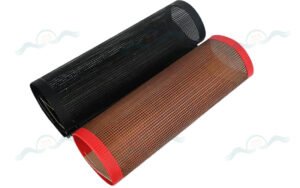

Storage, Transportation and Maintenance of High-Temperature PTFE Conveyor Belts
High-temperature PTFE conveyor belts are made from fiberglass cloth coated with PTFE (Teflon) resin. They offer heat resistance, corrosion resistance, non-stick performance, flame retardancy and air permeability, and are widely used in textile printing/dyeing, food baking, electronic component soldering and industrial pharmaceutical conveying.
Ⅰ. Storage and Transportation Requirements
Environmental control
- Temperature: keep the warehouse between -15°C and 40°C; extreme temperatures degrade material performance
- Humidity and cleanliness: protect from sun and rain; keep dry and clean to prevent mold and corrosion
- Isolation: never allow direct contact with acids, alkalis, oils or organic solvents
- Heat sources: keep at least 1 meter from any heat-generating device to prevent localized overheating
Storage method
- Roll storage: store belts in roll form; never fold, as prolonged compression causes structural deformation or cracks
- Periodic rotation: if stored longer than 3 months, rotate once per quarter to prevent local aging from sustained pressure
- Impact protection: lift smoothly with a spreader-bar sling, handle gently, and avoid damaging belt edges or loosening the roll
Ⅱ. Maintenance Key Points
Daily inspection
- Surface cleanliness: wipe the mesh periodically with alcohol or xylene to remove oil and debris, preventing tracking deviation and uneven tension
- Mesh flatness: check for flatness, stretching or local damage; repair cracks promptly before they spread
- Joints and edge binding: check bull-nose and steel-clip joints for looseness and edge binding for detachment, to avoid damage caused by tracking deviation
- Roller system: confirm drive and driven rollers rotate freely and lubricate regularly; ensure carrier rollers and side guards also move freely
Operation management
- Tension control: maintain suitable tension to prevent snaking or creeping and keep carrier and guide rollers free
- Guard plates: design dryer baffles so they do not abrade belt edges or let material jam between roller and belt
- Load limits: avoid overloading, and prevent carrier rollers, supports or lumpy material from obstructing the belt and causing tears
- Speed control: keep speed generally below 2.5 m/s to reduce inertial impact on the mesh
Repair and replacement
- Local repair: repair early damage such as small cracks or edge wear promptly and analyze the cause to prevent fracture
- Joints: heat-vulcanized bonding is recommended for reliability and strength; avoid local vulcanization for long-range damage
- Matching specifications: replacement belts must match the original type, specification, strength and ply count; never mix different grades
Ⅲ. Special Scenario Notes
- Food industry: for baking or freezing/thawing, use food-grade coated belts and clean regularly to meet hygiene standards
- Chemical industry: in strongly corrosive environments, use corrosion-resistant grades, shorten inspection intervals and replace aged parts promptly
- Extra-wide mesh belts: for wide equipment, double-weft construction is recommended for added stability