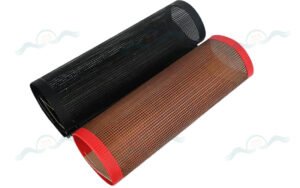

Installation and Commissioning Guide for Conveyors Using PTFE Conveyor Belts
Conveyors equipped with PTFE (Teflon) conveyor belts represent a highly efficient material handling system featuring large conveying capacity, low operating costs, and a wide application scope. Designed for transporting lightweight materials, these conveyors can operate as standalone units or be integrated into horizontal and inclined conveying systems alongside other equipment. Below is a detailed guide on how to properly install and commission conveyors utilizing PTFE conveyor belts.
I. Installation Steps for PTFE Conveyor Belt Systems
PTFE conveyor equipment is generally shipped as pre-assembled modular units. Avoid collisions during unloading and transport, and pay special attention during hoisting to prevent component deformation. Observe the following guidelines during installation:
- Uncrating & Cleaning: Modular units containing drive elements are typically crated for shipment. Handle with care during uncrating to avoid impacts. Drive components contaminated with heavy dirt or grease must be cleaned prior to installation.
- Structural Sequence & Assembly: Install the conveyor system only after the construction of transfer towers and storage hoppers is complete. Perform installation strictly according to geological parameters and design drawings, ensuring all moving parts operate flexibly. Adjust all tensioning devices to the appropriate level of tension.
- Weather Protection: During summer transit and storage, ensure rainproof measures are in place to prevent rain contact with mechanical components.
- Foundation & Anchoring: Equipment installation generally does not require pre-embedded anchors. The frame is secured using expansion bolts, and the leg height is adjustable; thus, no special ground foundation is required. Civil engineering teams should complete the floor according to the footprint and load distribution diagrams provided by the design team.
- Alignment & Positioning: Before installation, verify that the conveyor matches the parameters on the design drawings and geological layouts. Mark the centerline of each equipment unit on the ground according to the general layout assembly drawing. Ensure these centerlines align precisely with related upstream/downstream equipment centerlines before anchoring the feet with expansion bolts.
- Precision Calibration: Adjust the elevation, straightness, and levelness of all conveying surfaces according to the engineering drawings.
- Electrical Raceway Installation: Lay and secure all electrical conduits and cable trays.
- Electrical Wiring: Install power distribution cabinets/junction boxes and complete all electrical wiring connections.
II. Commissioning Steps for PTFE Conveyor Belt Systems
- Post-Installation Calibration: Fine-tune each piece of equipment after installation to ensure compliance with design drawings.
- Lubrication: Fill all gear reducers and moving mechanical parts with the specified lubricants.
- Manual Test Run & Integrated Tuning: Once the mechanical installation meets all requirements, conduct individual manual test runs for each machine unit. Subsequently, perform combined system integration commissioning to ensure smooth sequential action.
- Electrical System Commissioning: Debug electrical wiring, control logic, and operational sequences to ensure the equipment reaches optimal performance, meeting all designed functions and operating states.
(Note: Belt slippage and tracking deviation/misalignment are the most common failures in PTFE conveyor systems. Prompt and accurate troubleshooting is critical to safe, stable operation.)