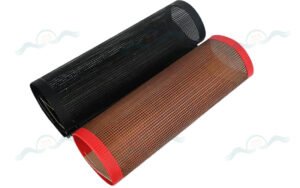
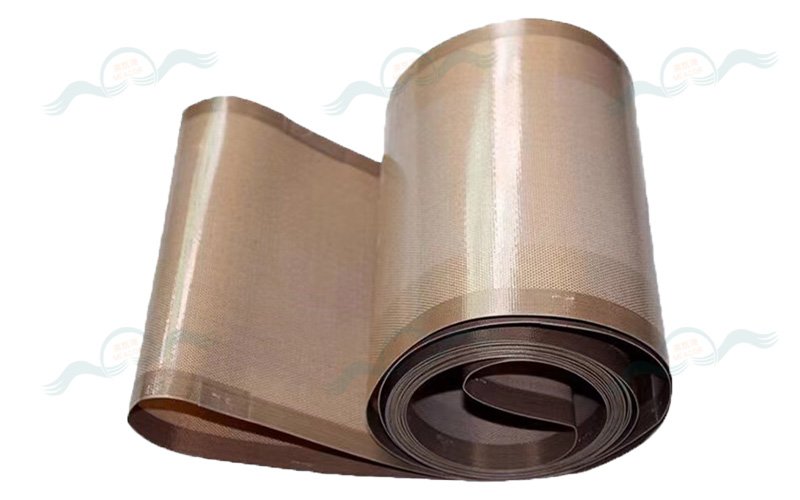
Performance Features and Industry Solutions for High-Temperature Drying Tunnel Conveyor Belts
As a core component in industrial thermal processing, a high-temperature drying tunnel conveyor belt directly determines production efficiency, energy consumption and equipment life. Suzhou Mitai New Materials analyzes it across three dimensions: technical features, industry fit and customized solutions.
Ⅰ. Core Performance Features
1. Ultra-wide temperature adaptability
- Range: -196°C to 300°C (some custom grades up to 400°C), covering extreme-swing scenarios such as food freezing/thawing and chemical high-temperature baking
- Thermal stability: no strength loss after 200 days of continuous operation at 250°C; weight loss <0.6% after 120 hours at 350°C, far beyond rubber belts (which soften at 200°C)
2. Chemical corrosion resistance
- Corrosion grade: SGS certified; withstands aqua regia, concentrated sulfuric acid (98%) and sodium hydroxide (50%); service life over 5× that of traditional rubber belts
- Compatibility: meets FDA 21 CFR 177.1550; non-toxic, no migration; suitable for pharmaceutical, semiconductor and other high-cleanliness industries
3. Mechanical stability
- Tensile strength: the 4×4 mm specification reaches 895 N/cm (Kevlar-reinforced), 60% lighter than metal mesh belts with 3× the load capacity
- Fatigue resistance: minimum applicable roller diameter 20 mm; over 10⁶ bending cycles; suits high-frequency start-stop equipment such as dyeing machine drying tunnels
4. Efficient breathable design
- Open area: 40%–60%; hot-air convection efficiency up 30%, drying energy consumption down 18%
- Typical results: drying cycles in food processing shortened 25%; electronic reflow soldering yield raised to 99.95%
Ⅱ. Industry Solutions
| Industry | Pain Point | Solution |
|---|---|---|
| Textile printing and dyeing | High-temperature drying deforms belts and causes fabric sticking | 4×4 mm PTFE mesh belt: 200 days at 250°C without breakage; self-cleaning surface cuts cleaning time 80% |
| Food processing | Traditional belts retain odors and lack heat resistance | HACCP-certified belt: no physical change switching between -30°C freezing and 200°C baking; no odor residue; 5× cleaning efficiency |
| Electronics manufacturing | Static adhesion lowers PCB yield | Anti-static coated belt: lead-free reflow yield up to 99.95%; static adhesion defects down 70% |
| Chemical and environmental | Strong acid/alkali corrosion shortens equipment life | Aqua-regia-resistant belt: life over 3 years; maintenance cost down 60% |
Ⅲ. Selection and Maintenance Guide
Key selection parameters
- Temperature: low-temperature use (-196°C to 100°C): 0.5 mm basic type; high temperature (200°C to 300°C): Kevlar-reinforced type
- Load: light load (e.g., food packaging): 370 g/m² basic grade; heavy load (e.g., chemical conveying): 600 g/m² Kevlar-reinforced grade
- Process fit: high-frequency start-stop equipment: double-weft structure, minimum roller diameter 20 mm; high-precision conveying: PTFE skived-film edge binding, flatness error <0.1 mm
Maintenance points
- Regular inspection: check wear monthly, focusing on joints
- Cleaning: use neutral cleaners; avoid scratching the surface
- Environment: keep ventilation good; avoid high-temperature, high-humidity conditions that accelerate aging
Editorial note: some figures (e.g., 895 N/cm, 99.95% yield, “reflow” use on a conveyor belt) are the source’s own claims; verify against test reports before publishing.