Silicone Coated Fabric & Raw Material Overview: Silicone Rubber Performance and Medical Applications
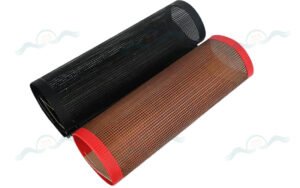
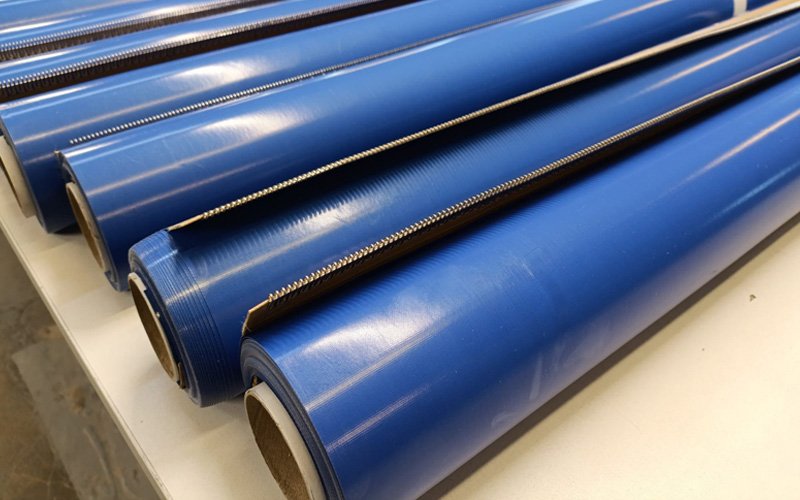
Silicone coated fabric is a high-performance, multi-purpose composite material manufactured by coating a high-temperature resistant, high-strength fiberglass substrate with silicone rubber through a specialized process. It is widely used across aerospace, chemical processing, petroleum, power generation, machinery, metallurgy, electrical insulation, and building construction sectors.
Basic Information on Silicone Rubber (Primary Raw Material)
- Chemical Name: Silicon dioxide, Silicone rubber
- Chemical Formula: $\text{mSiO}_2 \cdot \text{nH}_2\text{O}$
- Molecular Weight: 60.08
- CAS Registry No.: 112926-00-8
- EINECS No.: 231-545-4
- Density: $2.6\text{ g/cm}^3$
- Physical Description: Transparent or milky-white granular solid featuring an open porous structure with high adsorption capacity (absorbing moisture up to ~40% of its weight). When cobalt chloride is added, it turns blue when dry and red upon absorbing water, and can be regenerated for repeated use.
Key Properties & Biomedical Applications
Silicone rubber stands out among synthetic rubbers for being non-toxic, odorless, and resistant to extreme temperatures. It maintains its structural integrity, strength, and elasticity across extreme thermal ranges from $-90^\circ\text{C}$ to $+300^\circ\text{C}$. It also exhibits excellent electrical insulation, ozone/weathering resistance, light resistance, mold resistance, and chemical stability.
These properties make medical-grade silicone rubber highly valuable in modern medicine and biomedical engineering:
- Noise-Canceling Earplugs: Comfortable to wear, effectively blocking noise to protect the eardrum.
- Fetal Vacuum Extractor: Safe and easy to operate, adapting flexibly to fetal head size to prevent scalp hematomas and intracranial trauma during difficult deliveries.
- Artificial Blood Vessels: Highly biocompatible, integrating seamlessly with human tissue without immune rejection.
- Tympanic Membrane Repair Patches: Thin, flexible, smooth, and resilient, serving as an ideal material for eardrum reconstruction.
- Other Medical Devices: Artificial tracheas, artificial lungs, artificial bones, and duodenal tubes.
Performance Characteristics & Limitations
- Operating Temperature: Outstanding continuous thermal performance ranging from $-60^\circ\text{C}$ (or lower) to $+250^\circ\text{C}$ (or higher).
- Limitations: Mechanical properties such as tensile and tear strength are relatively weak at room temperature compared to most synthetic rubbers. Except for nitrile silicone and fluorosilicone rubbers, general silicone rubber exhibits limited oil and solvent resistance.
- Biomedical Grade Advantages: Possesses physiological inertness, non-corrosive properties, anti-coagulation capabilities, excellent biocompatibility, and withstands harsh sterilization conditions.